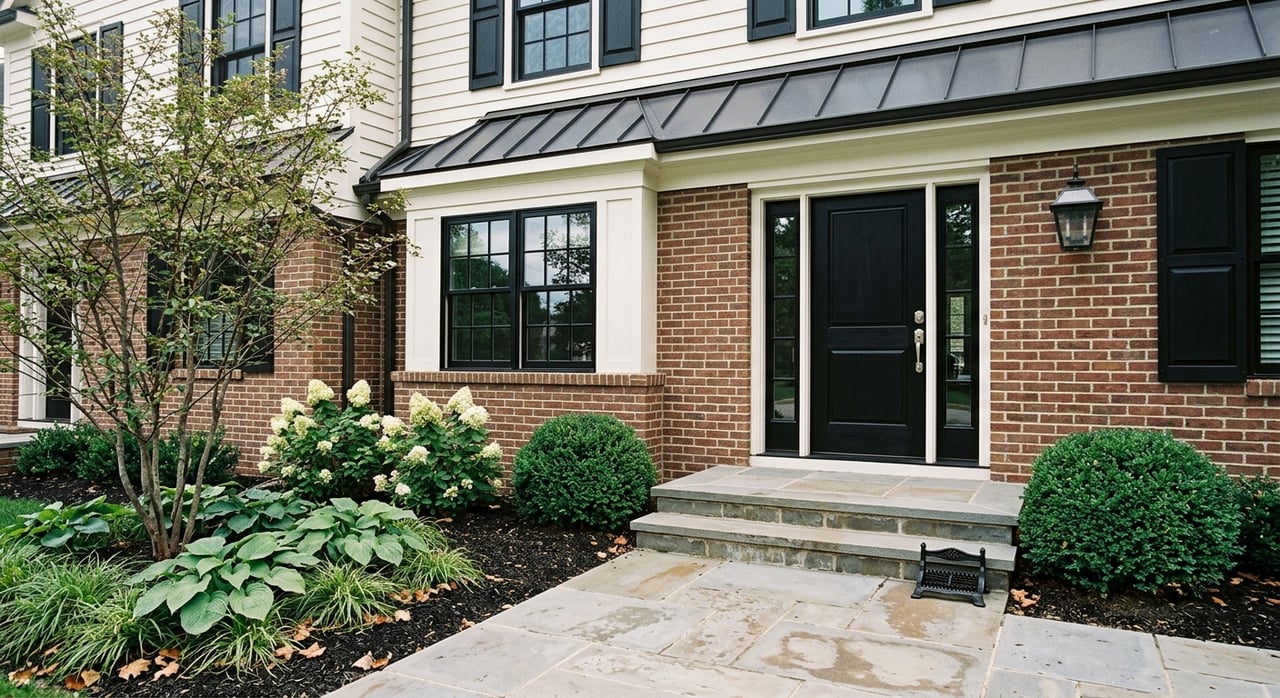
Townhome Or House In Princeton? How To Decide
If you are weighing a townhome versus a house in Princeton, you are not just choosing a floor plan. You are deciding how you want to live, what kind of monthly budget feels comfortable, and how much responsibility you want to take on. In a market where Princeton home values are high and homes can move quickly, it helps to get clear on these tradeoffs before you start touring. Let’s dive in.
Princeton remains a competitive, high-price market, which makes property type an important early decision. Zillow’s April 2026 home value index for Princeton was $976,780, while Redfin reported a March 2026 median sale price of $1.08 million.
Those figures come from different methods, but they point to the same reality. If you can narrow your search between a townhome and a detached house first, you can tour with more focus and make faster decisions.
Current Princeton townhome inventory is roughly 40 to 45 listings. Visible listings range from about $425,000 to $3.399 million, though many are clustered in the mid-$600,000s to low-$800,000s.
There are also several new-construction townhome options in roughly the $698,000 to $857,000 range. For buyers trying to stay in Princeton with a lower entry point, that range can open up more possibilities.
Current Princeton single-family inventory is roughly 70 to 80 listings. Visible house listings include examples at $795,000, $895,000, $949,000, $1.065 million, $1.395 million, and well above $2.85 million.
That spread shows a common pattern in Princeton. Detached homes often sit at a higher price tier, even if there are occasional lower-priced outliers.
The best choice is usually not about which property type is “better.” It is about which one fits your budget, routine, and long-term plans more naturally.
A useful way to think about this is total monthly cost versus total lifestyle value. That means looking beyond the purchase price and comparing taxes, HOA dues if any, insurance, and ongoing maintenance.
A townhome often works well if you want a simpler ownership experience and a more predictable monthly budget. In Princeton, that can be especially appealing when detached-home prices feel like a stretch.
Townhomes may also suit buyers who want to stay close to the core Princeton market without taking on the full cost and upkeep of a larger property. That is one reason they often appeal to relocation buyers, downsizers, commuters, and financially focused shoppers.
If your main goal is getting into Princeton at a more accessible price point, a townhome can create more options. Current listings show examples at $425,000, $499,900, $639,900, $675,000, $699,900, $760,000, and $780,000.
That does not mean every townhome is inexpensive. It does mean the category includes more entry points below the pricing of many detached homes in town.
One of the biggest reasons buyers choose a townhome is maintenance structure. In many association-run communities, some ownership costs and responsibilities are shifted into HOA dues rather than showing up as surprise exterior repair bills.
That predictability can be helpful if you prefer easier budgeting. Nearby Princeton Junction listings show HOA dues like $237 and $394 to $490 per month, which offers a useful benchmark as you compare monthly costs in the broader area.
If you travel often, split time between locations, or simply want less exterior work on your plate, a townhome can be a practical fit. Many buyers value having a smaller outdoor footprint and fewer property tasks to manage personally.
That convenience can matter just as much as square footage. For some households, less maintenance means more freedom.
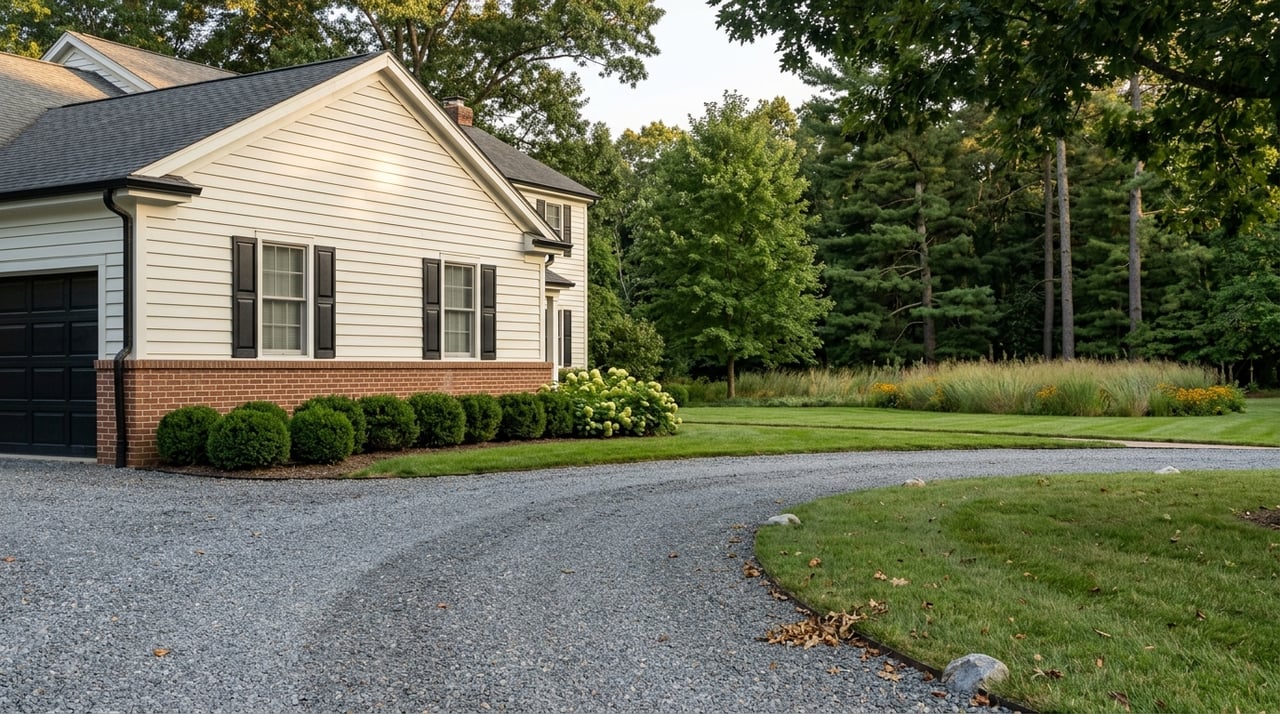
A detached house often makes more sense if privacy, yard space, and control are high on your list. While the price is often higher, the lifestyle value can be worth it if those features are central to how you want to live.
Houses also give you more direct control over the property. You are not typically working within the same kind of community governance structure that comes with many townhome associations.
If space between you and the next property matters, a detached home usually has the edge. Current Princeton listings include homes on larger lots, including one example with a 0.5-acre lot and expansive backyard.
That kind of setting is hard to replicate in most townhome communities. If outdoor privacy is a top priority, a house may align better with your goals.
A house usually gives you a larger outdoor canvas. Whether you want room for entertaining, gardening, or simply more breathing room, detached homes tend to offer more flexibility.
That said, not every buyer needs a large yard. If you enjoy outdoor space but do not want a lot of upkeep, a compact townhome courtyard or deck may be enough.
Detached-home ownership gives you more freedom, but it also gives you more responsibility. New Jersey’s seller disclosure form for Princeton-area transactions asks about roof condition, basement or crawl-space water, structural movement, plumbing, heating and air conditioning, additions, and flood history.
That is a good reminder that with a house, you should be ready to budget for these items directly. You control the decisions, but you also carry more of the risk.
If you are considering a townhome, do not stop at the listing photos and monthly dues. In New Jersey, common-interest communities are expected to maintain important records, including annual budgets, annual audits, and the most recent capital reserve study.
Reserve-study rules also call for an analysis of reserve adequacy and a 30-year funding plan. In practical terms, that means the financial health of the association matters just as much as the condition of the unit itself.
For an association-run townhome, ask for:
These documents can help you understand whether the monthly dues are supporting the community well or whether larger costs may be coming later.
Whether you buy a townhome or a house, due diligence matters. Princeton property taxes are billed quarterly, and the municipal tax office is the right source for checking records, deductions, and exemptions.
If you believe an assessment is inaccurate, Princeton notes that appeals go to the Mercer County Board of Taxation or the State Tax Court, with the usual filing deadline of April 1. That is worth knowing as you compare ownership costs between properties.
Beginning March 20, 2024, New Jersey sellers must disclose specific flood-risk information before a buyer becomes obligated. That applies to both townhomes and houses, so it should be part of your review no matter which type you prefer.
Flood risk, water history, and structural concerns are not side details. They are central to understanding the true cost and fit of a property.
If you are comparing a newly built townhome with a newly built house, New Jersey’s new-home warranty program and builder-registration rules apply to both property types. That can be a plus if you want newer systems, lower early maintenance needs, and the protections that come with registered new-home product.
In Princeton, several current townhome listings fall into the new-construction category. For some buyers, that can narrow the gap between convenience and quality.
If you are stuck, try comparing each option through five practical questions. This can bring the choice into focus quickly.
Your answers will usually point toward one option more clearly than broad assumptions ever will.
In Princeton, townhomes often make sense for buyers who want location efficiency, easier upkeep, and more budget control. Houses often make sense for buyers who want more separation, more outdoor space, and greater freedom to shape the property over time.
Neither choice is automatically smarter. The right move is the one that supports your finances and your lifestyle without forcing compromises that will frustrate you later.
A thoughtful local comparison can save you time, reduce stress, and help you avoid touring homes that were never the right fit to begin with. If you want help comparing monthly cost, maintenance exposure, and day-to-day lifestyle in Princeton, Vanessa Shives can help you sort through the options with clear, practical guidance.
Stay up to date on the latest real estate trends.
You can expect to work closely with us at showings, inspections, financial analyses, and handyman projects. We bring deep market knowledge, hands-on investment experience, and strong financial and analytical expertise to help you identify properties with potential.