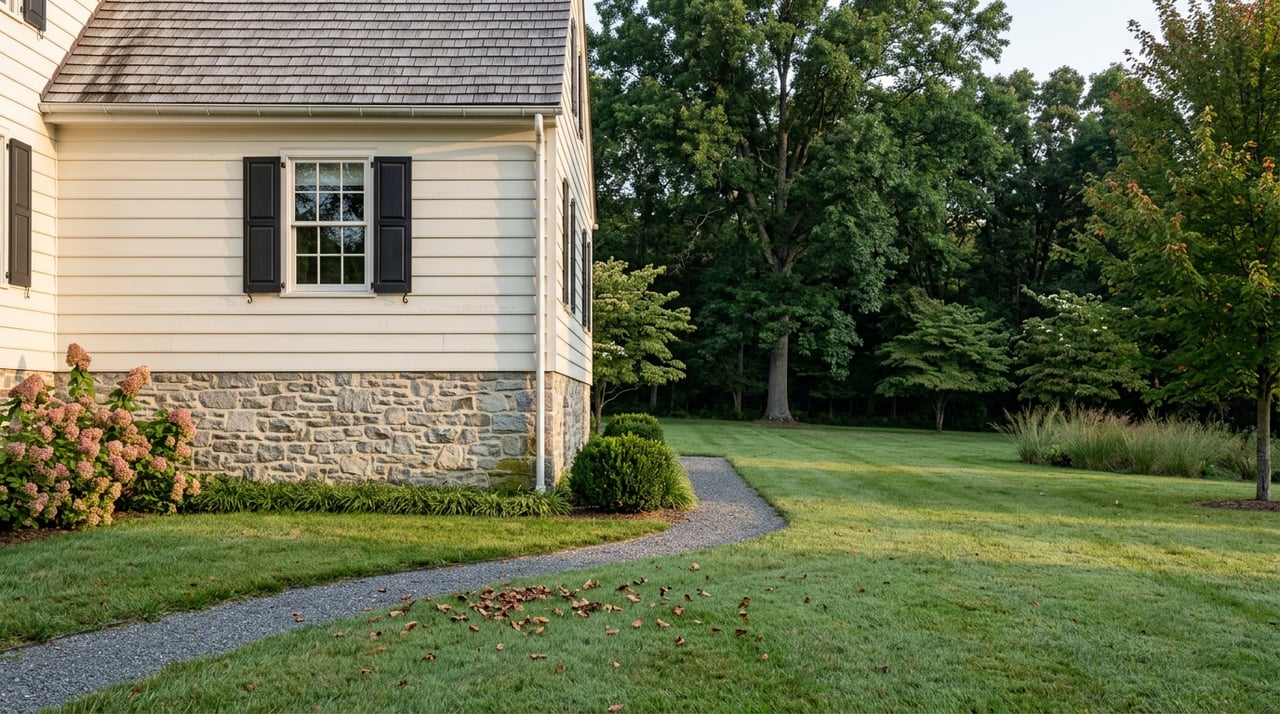
The Septic Renewal Skillman Buyers Don't See Coming
In Hopewell Township, selling a house on well and septic is a checklist you clear once. Pay $150, file two reports, wait ten business days, close. In Montgomery Township, where Skillman sits, the same system change enrolls you in something with an actual name: the Onsite Wastewater Disposal Management District. Membership renews. It follows the house, not the sale.
That distinction rarely comes up before an inspection is scheduled, which is exactly when it should. A septic or well system in this part of Somerset County is not a box you check at the closing table. In Skillman it is closer to a standing account with the township, one that keeps sending statements long after the moving trucks leave.
Compare the two towns side by side and the difference is not subtle.
| Hopewell Township | Montgomery Township (Skillman) | |
|---|---|---|
| Governing mechanism | One-time Letter of Review filed at transfer | Ongoing membership in the Onsite Wastewater Disposal Management District, Board of Health Chapter BH:XIII |
| Cost at sale | $75 septic review plus $75 water review, $150 total | Inspection and well test at sale, plus a license that continues afterward |
| What happens after closing | Nothing. The file is closed. | Conventional systems renew every three years. Alternative systems (aerobic treatment or peat moss) renew every year |
| Who tracks it | No one, once the transfer is approved | The Township Board of Health, indefinitely |
Hopewell's ordinance was built around a single moment: the transfer. Montgomery's was built around a district. The governing language, adopted under Ordinance 92-2 and amended by Ordinance 99-02, states that any owner or occupant of a property served by an on-site wastewater disposal system in the district "shall be a member of the Management District and subject to all of the requirements of this chapter." Membership is not a metaphor. It is the legal status you inherit the day you take title.
The renewal terms differ by system type, and the gap matters for anyone budgeting a purchase.
Conventional septic systems must renew their management license every three years, with proof the tank was pumped and the effluent filter cleaned if the system has one. Alternative technology systems, meaning anything using aerobic treatment or peat moss rather than a standard tank and drain field, renew annually. A buyer who assumes a septic inspection at closing satisfies the township's requirement is conflating two separate clocks. A typical septic inspection is generally considered current for about two years in New Jersey. Montgomery's conventional renewal cycle runs a year longer than that. Your inspection can lapse before your license renewal is even due, and neither document substitutes for the other.
This is the detail worth asking about before an offer goes in, not after: not just "does the septic work," but "when is this system's renewal due, and under whose name is the license currently held."
Montgomery Township is not a place where septic systems are the exception. Roughly 41 percent of the township's 8,143 properties run on septic, with the remainder on public sewer. That is a large enough share that any buyer touring homes in the Skillman section should expect to encounter one, not treat it as an outlier worth a footnote.
The geography explains why. Sourland Mountain forms the township's northwest border, a wooded ridge whose rocky soils historically limited farming to the flatter land closer to the Millstone River. Montgomery has preserved more than 7,900 acres of farmland and open space, and much of that preserved and adjacent acreage sits well outside the reach of municipal sewer lines. Homes on larger lots near the ridge, or backing up to preserved farmland, are disproportionately likely to be on well and septic rather than public utilities. It is not that Skillman lacks infrastructure. It is that a meaningful share of the township deliberately kept its rural edges intact, and septic systems are part of what makes that possible.
Septic is only one side of the ledger. Most of the same homes also draw drinking water from a private well, which brings New Jersey's Private Well Testing Act into the transaction. The PWTA, in effect since September 2002, requires the seller or buyer of a property with a potable well to test the untreated water for up to 43 parameters through an NJDEP-certified laboratory, with both parties reviewing and certifying the results before closing can occur.
A few numbers make the stakes concrete:
The law does not require an existing owner to retest between sales. A family that has lived in the same Skillman house for fifteen years has no legal obligation to check the water during that time. Whatever the last transaction's test showed is the last official record, even as groundwater conditions and the well's own condition continue to change. That makes the test a buyer orders at closing more consequential than it might first appear. It is often the newest data point on that well in years.
Timing matters too. If a well test is ordered early in a long transaction, the results can be months old by the time a buyer actually reviews them at closing. Ordering the test with enough lead time to avoid a rushed retest, but late enough that it reflects current conditions, is a scheduling detail worth handling deliberately rather than leaving to whichever week feels convenient.
Here is the pattern that ties septic and well together in Skillman, and the reason this deserves more attention than a line item on an inspection checklist. After closing, Montgomery Township keeps a formal, recurring relationship with your septic system. Nobody keeps a comparable relationship with your well. Once the PWTA test clears at sale, the state has no mechanism requiring you to test again unless you sell, rent to a tenant, or install a system that triggers a new review. One system stays under active township oversight for as long as you own the house. The other goes quiet the moment the ink dries, and stays quiet until the next transaction forces the question again.
That asymmetry is the thing to carry into a Skillman purchase or listing. The septic license is a recurring obligation you are stepping into. The well test is a point-in-time snapshot you are trusting to hold.
Before you list or make an offer, it helps to confirm:
Does every home in Skillman need a septic inspection to sell? New Jersey has no single statewide mandate requiring septic inspection at every sale. The requirement comes from Montgomery Township's own Board of Health code, which governs properties in its Wastewater Management District, separate from the inspection protocol the state sets for the actual testing procedure.
Who is responsible for the well test cost? Neither the PWTA nor its regulations specify who pays. In practice, sellers customarily cover the mandatory test, and any additional testing a buyer or lender requests beyond the minimum is negotiated separately.
How long is a septic license renewal valid once granted? Conventional systems in Montgomery Township renew every three years. Alternative technology systems, those using aerobic treatment or peat moss, renew annually regardless of ownership.
Septic and well systems are not a hurdle unique to Skillman, but the way Montgomery Township structures the obligation is. Treating it as a one-time inspection, the way a Hopewell Township closing might, is the kind of assumption that surfaces at the worst possible moment, usually a year or two after moving in. Knowing which clock you are inheriting, and when it is due, is the difference between a smooth transaction and an unwelcome letter from the Board of Health.
If you are weighing a purchase or preparing to list a home on well and septic in Skillman, Vanessa and Kenneth Shives bring the kind of financial scrutiny and local groundwork this kind of transaction rewards. Book a consultation and get a clear read on what you are actually taking on before you sign anything.
Stay up to date on the latest real estate trends.


You can expect to work closely with us at showings, inspections, financial analyses, and handyman projects. We bring deep market knowledge, hands-on investment experience, and strong financial and analytical expertise to help you identify properties with potential.